Argentina Luxury Real Estate After Cepo in 2026
July 16, 2026
July 16, 2026
The first thing a foreign buyer discovers about Argentina in 2026 is that the wire never happens. There is no mortgage for non-residents. There is no escrow. Closings are conducted in cash US dollars, counted at the escribano's office, in the presence of the buyer, seller, and their attorneys. The Milei government lifted most currency controls on April 14, 2025, which meant the parallel market disappeared and the exchange gap closed inside a 1,000 to 1,400 peso trading band. What did not change is the physical ritual of the deal.
That ritual matters because it filters buyers before price does. A US buyer sending a suitcase of hundreds through the front door of a Recoleta notary is doing the same thing as a US buyer signing for an $8,000-per-square-meter apartment in Puerto Madero. The transaction mechanics are identical whether you are buying a $150,000 pied-à-terre in Villa Crespo or a $2.5 million Gualtallary vineyard with 30 planted hectares. The luxury story people tell about Argentina, that the country is "cheap" in dollar terms, obscures the more important story: the two ends of the market, urban apartments and Uco Valley vineyard estates, are diverging into different asset classes with different carrying-cost profiles, and the decision between them is not a price decision.
Before April 2025, buying property in Argentina meant working the brecha, the spread between the official rate and the parallel "blue" dollar. Foreign buyers who brought USD cash effectively received a discount worth 30 to 70 percent depending on the year. That arbitrage is over. The Central Bank now lets the peso float between 1,000 and 1,400 to the dollar, and the MEP, CCL, and former blue rate converge inside that band. Repatriation of sale proceeds is possible through the MEP or CCL channels without prior central-bank approval, provided the original inflow was documented at purchase.
Inflation has fallen from 211 percent in late 2023 to under 35 percent annualized by Q1 2026, and 2025 GDP growth ran between 4.7 and 5.5 percent. On paper, this is stabilization. In practice, it means the entry discount foreign buyers relied on has narrowed considerably, and dollar-denominated prices have started repricing upward. Prime Buenos Aires apartments sit roughly 35 to 45 percent below their 2017 dollar peak, which is the window most cross-border advisors are pointing to now.
What did not change: title, tax, and closing mechanics. Foreign buyers still need a CDI tax ID, an escribano to hold the deed, and USD cash at signing. Buyer-side closing costs run 4 to 6 percent. A working assumption of 10 to 12 percent above the agreed price, including notary, stamp tax, brokerage, and setup, is the honest budget for anyone modeling a purchase.
Buenos Aires City apartments averaged $2,450 to $2,500 per square meter as of May and June 2026, according to Zonaprop's CABA index. The luxury tier is thinner than most foreign buyers assume. Luxury apartments represent roughly 2 to 4 percent of the CABA residential market, and very high-end villas or houses sit below 1 percent.
At specific price points:
| Budget (USD) | What it buys in prime BA |
|---|---|
| $700K–$1M | Entry-tier luxury apartment with imported finishes, terrace, concierge, parking |
| $2M | 250–350 sqm waterfront in Puerto Madero, or a mansion-style house in Belgrano R or Palermo Chico |
| $3M+ | Full-floor Recoleta or new-build Palermo Chico with private amenities |
The neighborhoods that carry the luxury label are narrow: Puerto Madero for towers and views, Recoleta for prewar prestige, Palermo Chico for embassies and gated calm, Belgrano R for detached houses, Núñez for newer stock. Puerto Madero remains the most expensive per square meter in the country, ranging $4,000 to $10,000. The tradeoff is that oversized apartments above 200 square meters without exceptional views are the slowest luxury product to resell, which is a signal for anyone underwriting exit liquidity.
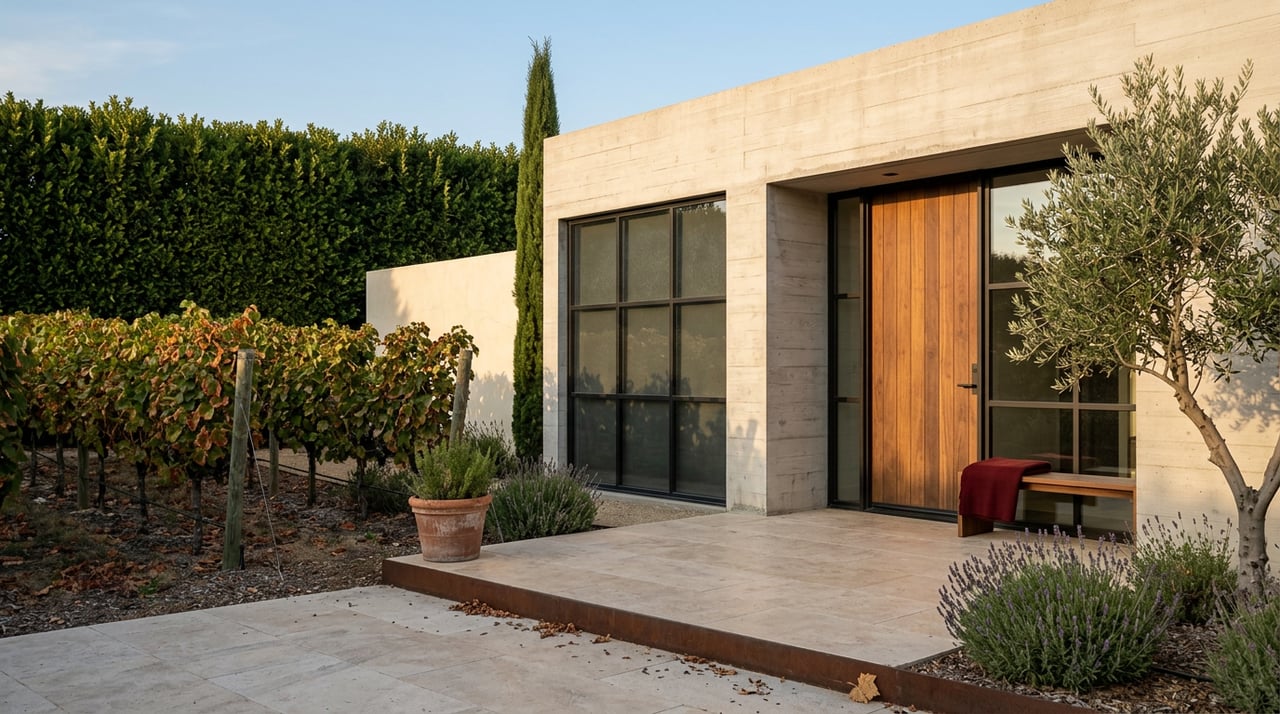
An hour and a half south of Mendoza city, in Tunuyán and the sub-regions of Los Chacayes, Gualtallary, and Vista Flores, the transaction changes shape entirely. Prices average roughly $1,000 to $1,200 per square meter for typical construction, which is about half of Buenos Aires. Luxury vineyard estates start around $300,000 and stretch well above $2 million for turnkey wineries with export operations.
The named developments matter here because Uco Valley is not an open market of comparables. It is a small set of curated projects:
Between 2018 and 2024, 26 new tourism-facing wineries opened in the valley. The 2026 season brought underground cellars, architect-designed tasting rooms, and expanded fine dining, which is pushing Uco toward a Tuscany-style price-to-prestige comparison at a fraction of European entry costs.
The mistake is treating Buenos Aires and Uco Valley as two versions of the same trade. They are not. One is an apartment market with concentrated liquidity and known exit multiples. The other is an agricultural-lifestyle asset with water rights, zoning quirks, and management overhead that never appears on a portal listing.
The hidden number in Buenos Aires is expensas, the monthly building maintenance fee. In premium towers with pools, 24-hour security, and concierge, expensas can eat meaningfully into net yield, and rising labor costs in Argentina have pushed these fees up in real terms. Properties in buildings with high expensas scare off both buyers and tenants at resale.
The hidden number in Uco Valley is vineyard management. La Morada's $150-per-month HOA covers common areas, not viticulture. Casa de Uco and The Vines both run turnkey vineyard operations, meaning the estate manages soil selection, harvest, bottling, and label creation on the owner's behalf, at cost. Cost per bottle at the professionally managed projects runs $5 to $12 depending on oak, aging, and packaging. A one-hectare vineyard yields roughly 7,000 bottles per year, which sets the operating math either as a hobby line item or a modest income stream, but rarely a wealth-generator on its own.
Agricultural properties also carry water-rights considerations that urban apartments do not. Working with a Mendoza attorney who specializes in rural title is not optional.
Three items surprise almost every first-time cross-border buyer:
Can foreign buyers repatriate sale proceeds in 2026? Mostly yes. Sale proceeds from real estate purchased with documented USD inflow can be repatriated through the MEP or CCL channels without prior Central Bank approval. The documentation of the original inflow at closing is the single most important piece of paperwork for any future exit.
Is Uco Valley a lifestyle purchase or an investment? For most cross-border buyers, it is a lifestyle purchase with a modest income offset. Gross rental yields in Mendoza run 5 to 7 percent for well-positioned properties. Vineyard economics on their own rarely justify the acquisition. The buyers who are happiest with these estates are those who wanted the Andes, the harvest, and the label, and treated the yield as a rebate.
Argentina rewards patience and punishes assumption. The mechanics that make a Puerto Madero closing straightforward are the same mechanics that make a Gualtallary purchase complicated, and the reverse is equally true. Peter Kempf International advises high-net-worth clients on cross-border acquisitions in Argentina and select international markets, with introductions to vetted counsel, escribanos, and developer-side principals in both Buenos Aires and Mendoza. To review private opportunities or discuss a specific transaction in confidence, request private access to listings.
Stay up to date on the latest real estate trends.
I pride myself in providing personalized solutions that bring my clients closer to their dream properties and enhance their long-term wealth. Contact me today to find out how I can be of assistance to you!