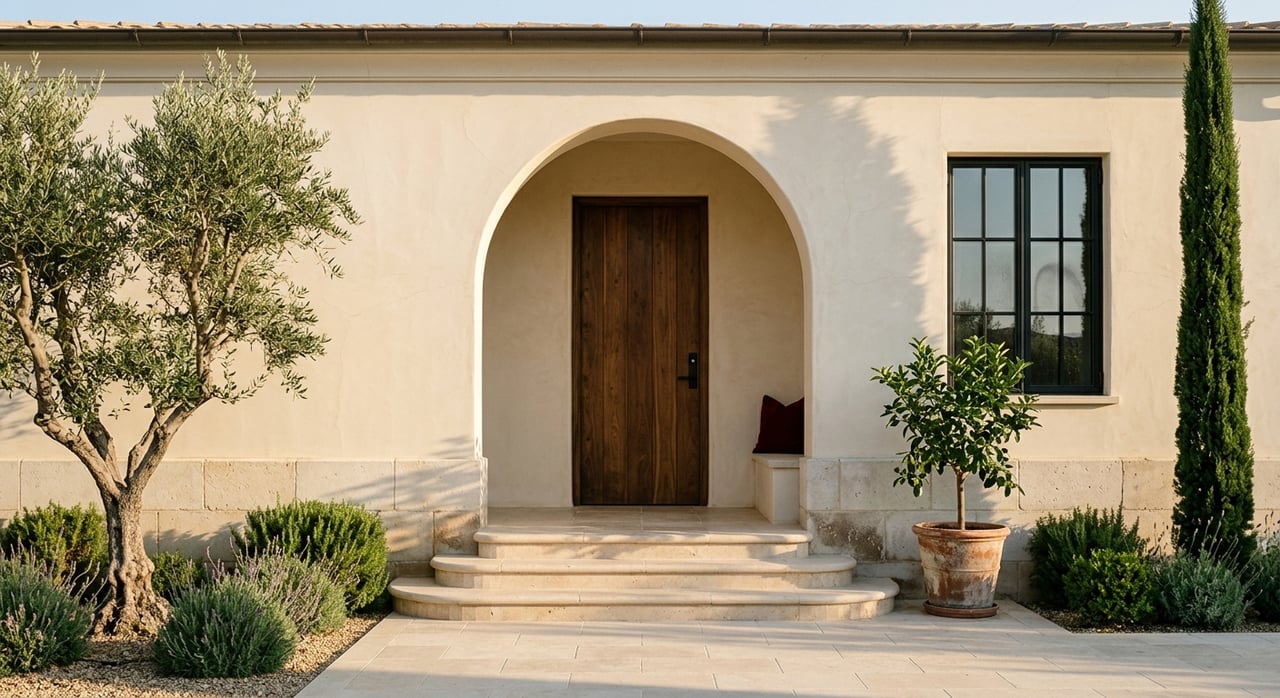
Italy Property Visas and Residency for Buyers
July 2, 2026
July 2, 2026
Dreaming about a home in Italy is easy. Understanding what that purchase does and does not unlock is where many buyers need clarity. If you are exploring a primary residence, a seasonal retreat, or a long-term lifestyle plan, it helps to separate the real estate decision from the immigration decision from the start. This guide walks you through the difference, the main visa pathways buyers compare, and how a property purchase can support your plan without replacing it. Let’s dive in.
The most important starting point is simple: owning property in Italy is not the same as having the right to live there full-time. For many non-EU nationals, short stays still follow the Schengen rule of 90 days within any 180-day period.
That means you can buy a villa, apartment, or countryside estate and still be subject to the same short-stay limit. The deed gives you ownership rights, but it does not create immigration status.
If your goal is to spend more time in Italy, you will need to match your plans to the correct visa or residency pathway. In practice, the smartest sequence is usually to choose the visa category first and then align your purchase or lease with that application.
Before purchasing, non-EU and non-EEA buyers should confirm whether reciprocity applies to them. Italy’s foreign ministry notes that some non-EU or non-EEA citizens may need to verify that Italians are allowed to buy property in their home country.
EU and EEA citizens are exempt from this issue, and some non-EU residents already in Italy with qualifying permits may be exempt as well. Because this point can affect eligibility to purchase, it is worth confirming early in your planning process.
If you plan to stay in Italy long term, the key legal step is the permesso di soggiorno, or residence permit. Italian visa guidance states that foreign nationals entering for a long stay must apply for the relevant permit within eight working days of arrival.
This is another reason the property purchase should not be viewed as the main immigration step. The right visa, followed by the proper residence-permit process, is what supports lawful long-term living in Italy.
For many buyers who do not plan to work in Italy, the elective residence visa is often the closest fit. This route is intended for applicants with substantial, steady, non-work financial resources who want to make Italy their primary residence.
Just as important, this is not an extended tourist visa. It also does not allow you to work or be employed in Italy.
A home purchase can strengthen an elective residence application because you must show proof of lodging. Consular guidance says that proof can include a purchase contract or lease for a house or apartment in Italy, registered with the Agenzia delle Entrate and in your name.
That makes ownership relevant, but only as supporting documentation. It does not replace the need to show strong financial means from non-work sources.
Based on the official structure, this pathway is generally most aligned with buyers living on steady non-employment resources. That may include retirees or households supported by reliable passive income.
If your Italy plan centers on lifestyle, continuity, and time in residence rather than local employment, this is often the first category worth examining.
Italy also offers an investor visa, but this is where many international buyers make the wrong assumption. A residential property purchase by itself is not a qualifying investment for Italy’s investor visa.
The official qualifying categories are:
For high-net-worth buyers, this matters because the investor visa is a capital-allocation pathway, not a real-estate-purchase pathway.
The process begins with a nulla osta. After that, the applicant may obtain a two-year investor visa, then request a two-year residence permit within eight days of arrival.
The qualifying investment or donation must be completed within three months after arrival. A three-year renewal is available if the investment is maintained.
If you are considering both an Italian home and a broader residency strategy, it helps to treat these as parallel decisions rather than the same one.
Italy also has a digital nomad or remote worker visa for non-EU citizens who intend to work remotely while living in Italy. This route is designed for people whose work can be performed from Italy while serving clients or employers remotely.
Current consular guidance requires accommodation in your name and proof of qualifying income. As with other long-stay pathways, you must then apply for a residence permit within eight working days after arrival.
This is a work-based route, not a passive-income route. The guidance says the qualifying income must come from the remote work being performed, not from passive sources such as rents, stocks, or Social Security.
That makes this pathway quite different from elective residence. If your income comes from active remote work, this visa may be relevant. If your income is primarily passive, the elective residence route may be the more natural comparison.
A property purchase can play a meaningful role in your overall strategy. It can help satisfy the housing requirement for certain applications, especially elective residence and some remote-work filings.
Ownership can also make your relocation plan look more established and credible from a consular point of view. For many buyers, that is a practical advantage.
It is just as important to understand the limits. A home purchase does not replace the income test for elective residence, the investment requirement for the investor visa, or the work basis for remote-worker status.
In short, buying a home does not create immigration status on its own. It supports the right application, but it does not substitute for it.
Even if you obtain a long-stay Italian visa or residence permit, that does not create unlimited freedom to live elsewhere in the Schengen area. Short-stay travel in other Schengen states still follows the 90-days-in-any-180-days rule.
That distinction matters if your plan includes time in multiple European countries. Italy may become your lawful base, but travel beyond Italy still follows the applicable Schengen framework.
Buyers often compare Italy with other European residency markets, especially when lifestyle and mobility are both part of the conversation. Today, Italy should be understood as a lifestyle and residency market with separate visa gates, not a market where buying a home directly creates residency.
That sets it apart from some buyers’ expectations and from the older golden-visa model once associated with other countries.
Portugal still offers investment residence routes, but current official guidance says the qualifying investment activity may not be directly or indirectly aimed at real estate investment. In other words, Portugal is no longer a property-based golden-visa market.
Greece remains one of the clearest property-linked comparators in Europe. Official guidance states a minimum real-estate threshold of €800,000 in Attica, Thessaloniki, Mykonos, Santorini, and islands with more than 3,100 residents, and €400,000 elsewhere.
There are also special real-estate cases, including listed-property routes at €250,000. For buyers focused specifically on a direct property-to-residency model, Greece often enters the comparison.
Spain has also moved away from the investor-visa model tied to this type of planning. The Spanish consulate in Beijing states that investor visas were abolished as of April 3, 2025, and that new investor applications were no longer accepted after March 21, 2025.
If you are serious about buying in Italy, clarity saves time and protects momentum. Start by identifying your real goal.
Are you buying for seasonal use within Schengen limits? Are you planning to relocate without working in Italy? Or do you intend to live there while continuing remote work?
Once that goal is clear, you can evaluate property options that support the right legal pathway. This approach is especially valuable in the luxury market, where timing, privacy, and cross-border coordination often matter as much as the property itself.
For buyers seeking discreet guidance, Peter Kempf International brings a consultative, relationship-first approach to international second-home planning, curated introductions, and private access opportunities. When your property search is part of a larger lifestyle decision, experienced coordination matters.
If you are considering a primary or vacation home in Italy and want a clear, private conversation about the real estate side of your plan, Peter Kempf International can help you take the next step.
Stay up to date on the latest real estate trends.

I pride myself in providing personalized solutions that bring my clients closer to their dream properties and enhance their long-term wealth. Contact me today to find out how I can be of assistance to you!