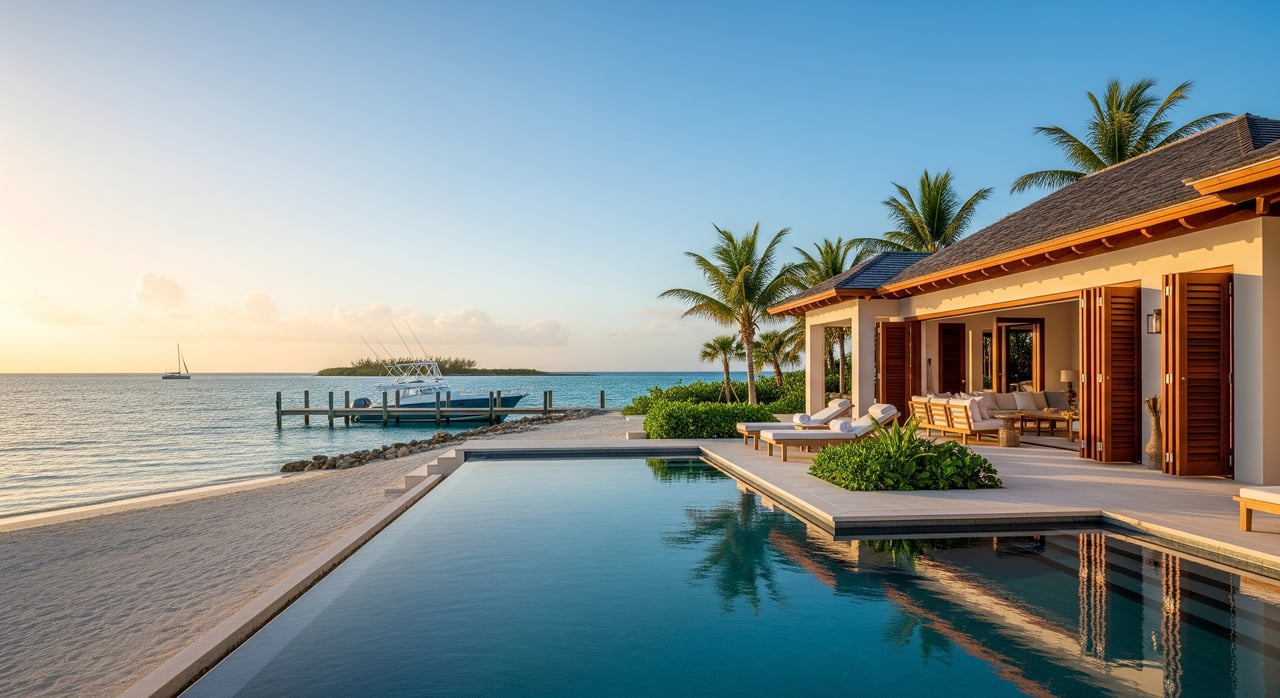
Experience the Bahamas Luxury Home Lifestyle
February 5, 2026
February 5, 2026
Picture waking to glass-clear water, stepping onto your dock, and deciding between a morning dive or a quick hop to your favorite cay. If you are weighing a second home in the Bahamas, you want more than postcard beauty. You want to know how life actually works day to day. In this guide, you will learn what ownership feels like, from access and staffing to utilities, seasonality, insurance, and which islands fit your style. Let’s dive in.
You get rare proximity to the U.S. with a true island lifestyle. Nassau on New Providence is the main gateway and service hub, with scheduled flights from major cities. Many owners also use private aircraft or seaplanes to reach smaller islands.
The archipelago supports a vibrant yachting culture and a strong appetite for privacy. Waterfront homes, private docks, and marina access are common priorities. For many, the tax landscape is an added draw. The Bahamas does not levy personal income tax, capital gains tax, or inheritance tax. Transaction duties and Value Added Tax do apply, so you should plan for those in your budget.
Foreign buyers can purchase freehold property in the Bahamas. A local real estate attorney typically runs title searches, prepares transfer documents, and registers the transaction. Some properties with special status, such as crown or agricultural land, may require additional approvals. Local counsel will guide you through these exceptions.
A smooth purchase usually involves a few key professionals:
Cash purchases are common in the luxury segment. If you prefer a mortgage, expect stricter underwriting and larger down payments than in many mainland markets.
You will encounter transaction-level costs and ongoing charges. Plan for:
Lynden Pindling International Airport in Nassau is the main point of entry for commercial flights. Other islands have regional airports with customs and immigration, and many owners use private aviation for flexibility. Once on island, you will rely on a car or golf cart. On small cays, daily life can be walkable.
Boating is a part of the lifestyle. Many luxury homes sit near marinas or have private docks or tender moorings. If you plan to keep a yacht, look at communities with full-service marinas and protected harbors.
Domestic staff are common in luxury homes. Housekeepers, chefs, gardeners, and boat captains help keep your property and routines running well. Many developments offer property management that handles maintenance, provisioning, and staffing. If you plan to hire non-Bahamian staff, work permit rules apply. Owners often blend Bahamian team members with short-term specialists during peak season.
Supply chains are an important planning point. Much of what you will use, from appliances to specialty foods, is imported. Expect longer lead times and higher costs than mainland markets, and build in a plan for freight and customs.
Electricity reliability varies by island. Most luxury homes add generators, and many invest in solar with battery storage to improve resilience and help manage costs. Water supply may be municipal in some areas. In others, homes rely on cisterns, wells, or private desalination systems. If you are near the water, give extra attention to freshwater capacity and system design.
High-speed internet is best in Nassau and Grand Bahama. On out islands, owners often supplement with satellite services to ensure consistent connectivity. For sewage and waste, major centers have municipal service. Remote properties typically use septic and private waste solutions.
Nassau offers private hospitals and clinics for routine and many urgent needs. For major or specialized procedures, medical evacuation to larger centers, often in Florida, is common. Full-service international and boarding school options are concentrated in Nassau and select islands. Families on smaller cays often opt for boarding schools, regional international schools, or homeschooling.
The Bahamas sits in the Atlantic hurricane zone. Insurance is essential and cost will depend on exposure, elevation, and construction. Many insurers require mitigation measures such as impact-rated glass, shutters, elevated utilities, and protected mechanical systems. After major storms in recent years, building standards have emphasized stronger construction and wind resistance.
Seasonality shapes how you will use your home. High season runs from about November through April. Many owners plan peak occupancy, entertaining, and charters during these months. Hurricane season runs from June through November. Owners may spend less time on island during peak storm months, focus on storm-readiness, or restrict rentals to the high season.
Each island offers a distinct pace and service level. Think about your priorities, then match them to the right location.
Your operating budget will look different from a mainland home. Common cost categories include:
A disciplined process will save time and reduce surprises. Use this checklist to frame your next steps:
If you value easy access from the U.S., a yacht-friendly lifestyle, and the privacy of island living, the Bahamas delivers a compelling mix. The key is planning. With the right island match, strong insurance and infrastructure, and a capable local team, daily life is both relaxed and well supported.
If you want curated introductions to trusted local attorneys, property managers, and select listings, start with a quiet conversation. Request private access and a tailored path through Peter Kempf International.
Stay up to date on the latest real estate trends.
I pride myself in providing personalized solutions that bring my clients closer to their dream properties and enhance their long-term wealth. Contact me today to find out how I can be of assistance to you!